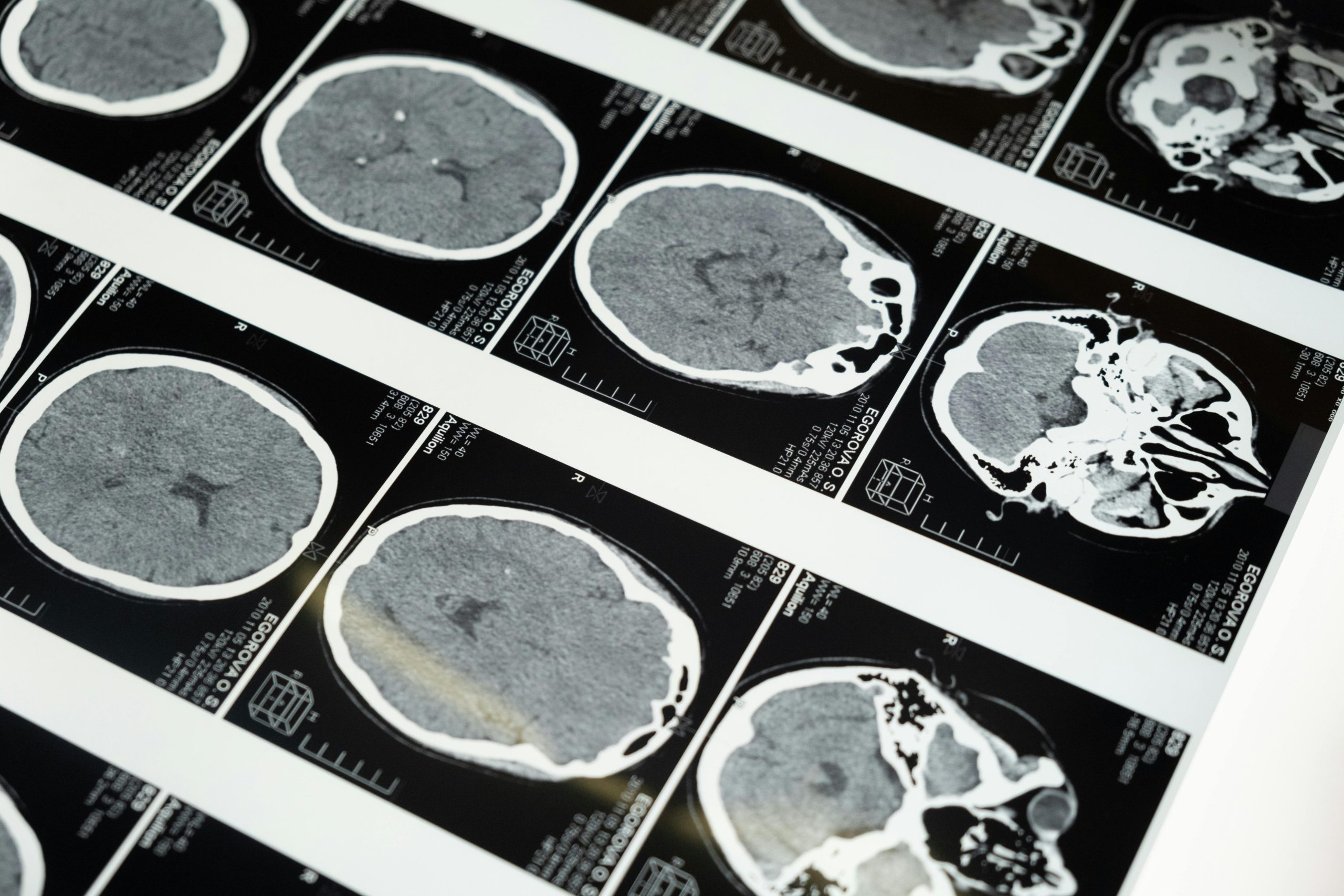
When someone has a head injury, the word “diagnosis” can sound like it should arrive as a single, clear answer: one test, one result, one name for what is wrong. In practice, diagnosing a brain injury is more like assembling a picture from several pieces, and it can take time for that picture to come into focus.
This guide walks through how the care team works out what has happened, from the first checks at the bedside to scans, blood tests, and the assessments that come later. It is here to help you follow the process and the language, not to interpret a particular result. What any of it means for your loved one is a question for the team who is caring for them.
Key takeaways
- A brain injury is rarely diagnosed by one test. The team reads the exam, the Glasgow Coma Scale, scans, and how a person responds over time, all together.
- Scans show physical damage, but a normal scan does not rule out an injury, especially with a concussion or subtle damage.
- Injuries are graded mild, moderate, or severe, often using the Glasgow Coma Scale. That label describes the injury at the start, not how recovery will go.
- Newer tools, including a blood test, can help decide who needs a scan, but the care team still puts the whole picture together.
What diagnosis really means here
There is no single machine that a person is placed into which prints out “brain injury” and how bad it is. Instead, the team gathers different kinds of information and weighs them against each other.
Some of it comes from examining the person directly: how alert they are, how they move and speak, how their eyes respond. Some comes from scans that show the physical state of the brain. And some comes from watching how they change over the following hours and days. No single piece tells the whole story, and that is exactly why the team looks at all of them together.
The neurological exam
The first and most immediate assessment does not involve any machine at all. A doctor or nurse examines the person at the bedside, looking for signs of how the brain and nervous system are working.
They check things like whether the person is awake and responsive, whether they know where they are, how their pupils react to light, whether they can move each arm and leg, and how their reflexes respond. These checks are quick, and they are often repeated, because a change from one exam to the next can matter as much as any single result. If your loved one is woken or gently prodded through the night, this is usually why.
The Glasgow Coma Scale
Early on, the team often uses the Glasgow Coma Scale, a simple, structured way to score consciousness. It rates three things, eye opening, verbal response, and movement, and adds them into a single number from 3 to 15.
A higher number means someone is more alert and responsive, and a lower number means they are less so. The score helps the team communicate clearly, track change over time, and guide decisions. It is a snapshot rather than a verdict, and it can shift as someone improves or as sedation wears off. Our guide on the Glasgow Coma Scale explains what the numbers mean in more detail.
Imaging: CT and MRI scans
To see the physical state of the brain, the team turns to scans. A CT scan is almost always first, because it is fast and very good at quickly spotting the things that matter in an emergency, such as bleeding, fractures, and swelling.
An MRI gives more detail and can reveal subtler injury, so it is often used a little later, once someone is stable. Both are painless. If your loved one is having either kind, our guide on CT scans and MRIs after a brain injury walks through what to expect from each.
The blood test for brain injury
A newer tool has recently joined the picture. After a suspected concussion, a blood test can measure two proteins, known as GFAP and UCH-L1, that can rise when brain cells are injured.
Its main use is to help decide who needs a CT scan. In adults, when the test is done within 24 hours of the injury, a negative result can help doctors safely rule out the need for imaging, and some versions give results in about 15 minutes at the bedside. It is a triage tool, meant to guide the next step rather than to stand alone as a diagnosis, and the team reads it alongside the exam like everything else.
How severity is graded
You will often hear a brain injury described as mild, moderate, or severe. These categories are commonly based on the Glasgow Coma Scale, along with things like whether the person lost consciousness and for how long, and how long any memory gap around the event lasted.
As a rough guide, a score of 13 to 15 is usually described as mild, 9 to 12 as moderate, and 8 or below as severe. One thing is worth holding onto: this label describes the injury at the beginning, not how recovery will unfold. A “mild” injury can still have real and lasting effects, and people with serious injuries can and do make meaningful progress. The grade is a starting point, not a prediction.
Diagnosing a concussion or milder injury
Not every brain injury shows up on a scan, and many mild injuries and concussions are diagnosed mainly from symptoms and the exam rather than from imaging. In fact, scans are often normal in concussion, which does not mean nothing happened.
Doctors ask about the injury and about symptoms such as headache, dizziness, feeling foggy, nausea, sensitivity to light or noise, and changes in sleep or mood. In sport, standardized tools are used on the sidelines and afterward to assess these symptoms in a consistent way. Sometimes no scan is ordered at all, and that is a considered decision rather than the team being dismissive.
Assessing thinking, memory, and mood
Some of the effects of a brain injury are not about what a scan can show, but about how a person thinks, remembers, concentrates, and copes. These are often assessed later, once the immediate situation has settled.
Neuropsychological testing is a set of structured tasks and questions that measure things like memory, attention, language, problem solving, and processing speed. It helps build a fuller understanding of how the injury is affecting daily life, and it can guide rehabilitation and support. This part of the picture often continues to develop over weeks and months.
Why diagnosis can take time
A brain injury is not always a fixed thing that can be measured once and filed away. In the early stage especially, the brain can keep changing, with swelling or new bleeding developing over hours and days, which is why the team repeats exams and sometimes repeats scans.
So the answer to “what is the diagnosis” can genuinely evolve, and that uncertainty is hard to sit with. It usually reflects careful monitoring rather than confusion. If you are ever unsure where things stand, it is always fair to ask the team what they know so far, what they are still watching for, and when they might know more.
Common questions
Why can’t they just do one test to know for sure?
Because no single test captures everything. Scans show the physical state of the brain but can miss subtle damage, and the exam shows how the brain is working but not exactly why. The team combines the exam, the Glasgow Coma Scale, imaging, and how the person responds over time, because together these give a far more accurate picture than any one of them alone.
The scan was normal, so does that mean there is no brain injury?
Not necessarily. Some injuries, including concussion and diffuse axonal injury, often do not show clearly on scans, particularly an early CT. A normal scan is reassuring, but doctors diagnose using the whole picture, including symptoms and the exam, not the scan alone.
What do mild, moderate, and severe actually mean?
They are categories based largely on the Glasgow Coma Scale and factors such as loss of consciousness and memory gaps around the event. Roughly, 13 to 15 is mild, 9 to 12 is moderate, and 8 or below is severe. The label describes the injury at the start, not how far someone will recover.
Is there really a blood test for brain injury?
There is a blood test that measures proteins which can rise after a brain injury. Its main role is to help decide whether an adult with a suspected concussion needs a CT scan, especially within the first 24 hours. It supports the decision rather than replacing the doctor’s assessment.
How long does it take to get a diagnosis?
Urgent, life-threatening problems like a bleed are usually identified very quickly with a scan. The fuller understanding of an injury and its effects can take much longer, sometimes weeks or months, as the team watches how the person changes and, later, assesses thinking and memory. A diagnosis that keeps developing is normal.