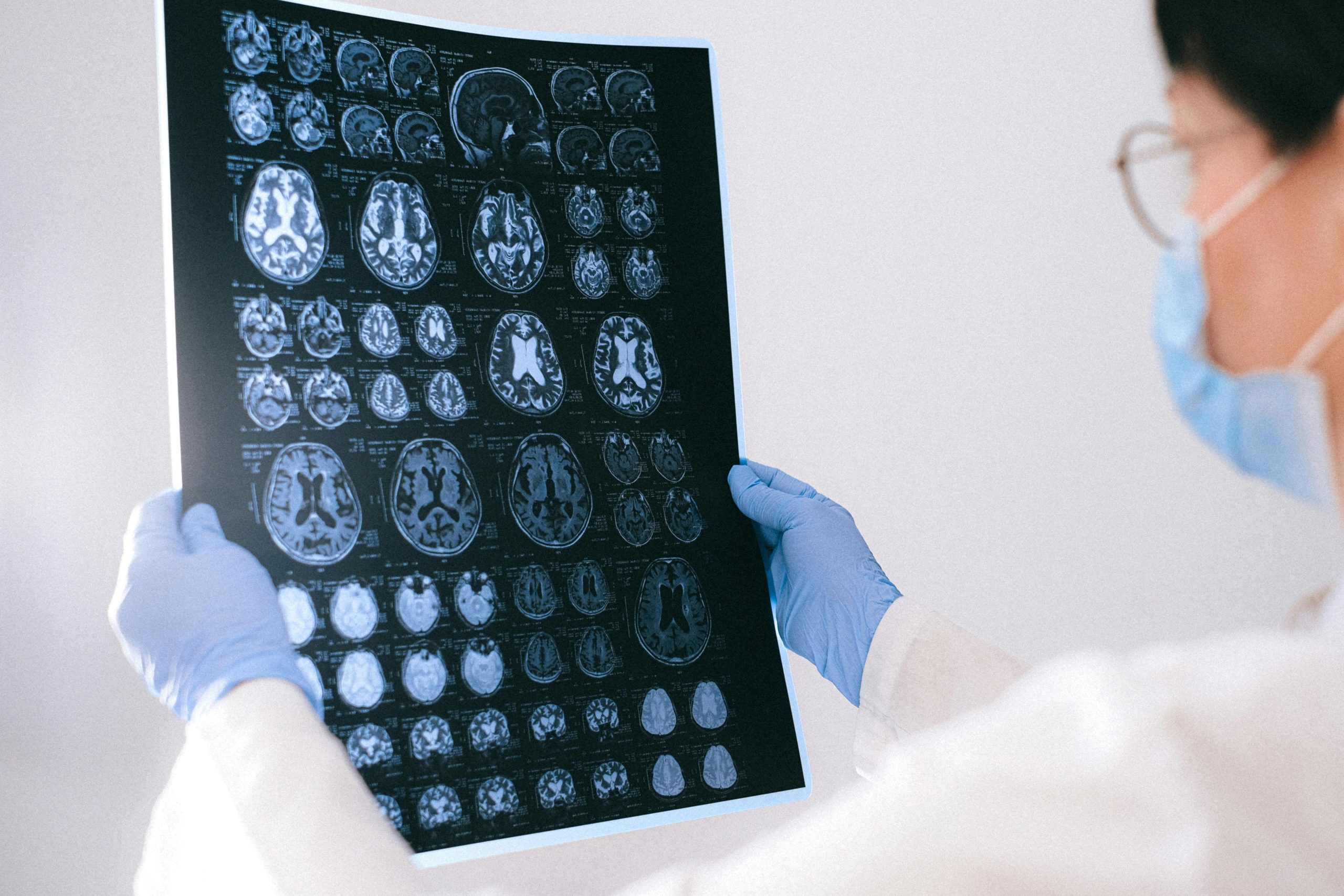
Brain injuries are not all the same, and in the early days you may hear a string of different labels: traumatic, acquired, concussion, diffuse, penetrating. It is a lot of unfamiliar language at an already frightening time. Knowing roughly what the words mean will not change the injury, but it can make the care team’s explanations easier to follow and the whole situation a little less bewildering.
This is a plain-language map of the main types of brain injury, and where to read more about each. It is here for orientation, not to interpret a particular injury. Which type an injury is, and what it means, is a question for the care team, who can see the whole picture.
Key takeaways
- The first split is traumatic (from an outside force) versus acquired (from inside the body).
- Injuries are also described by severity (mild, moderate, severe) and by pattern (where and how).
- The labels guide treatment, but they describe the injury, not a fixed outcome.
- Two people with the same label can recover very differently. A type is not a forecast.
The first distinction: traumatic and acquired
The most important split is between how the injury reached the brain:
- ›Traumatic brain injury (TBI): caused by an outside force, such as a fall, a crash, a blow, or something piercing the skull.
- ›Acquired, or non-traumatic, brain injury (ABI): caused by something inside the body, such as a stroke, a lack of oxygen, an infection, or a tumor.
Both can be mild, moderate, or severe, and both can lead to lasting changes in movement, thinking, and emotion. Our guide on what causes a brain injury explains this distinction, and the causes behind each, in more detail.
By severity: mild, moderate, and severe
Doctors also describe injuries by how serious they appeared early on, judged by things like how long someone lost consciousness, how long they were confused, and their score on the Glasgow Coma Scale.
- ›Mild (concussion): the most common form, caused by a bump, blow, or jolt that briefly disrupts how the brain works. Most people recover within weeks, though for some, symptoms linger as post-concussion syndrome. Read more in our guide to concussion and mild TBI.
- ›Moderate and severe: more serious injuries that often involve a longer loss of consciousness, changes on brain imaging, and a longer road of hospital care and rehabilitation. Our guide on moderate and severe brain injury walks through what to expect.
It is worth holding on to one thing here: these labels describe the injury at a moment in time. They are a starting point for the team’s thinking, not a prediction of how someone will recover.
Traumatic injury patterns
Within traumatic injury, doctors use more specific words for what happened to the brain and where. You may hear:
- ›Closed injury: the skull is not broken open, but the brain is injured inside it. This is the most common kind.
- ›Penetrating (open) injury: an object, such as a bullet or fragment, breaks the skull and reaches the brain. These carry a higher risk of bleeding and infection and often need surgery. Read more in our guide to penetrating brain injury.
- ›Contusion: a bruise on the brain itself, where small blood vessels are damaged.
- ›Hematoma: a collection of blood, or bleeding, in or around the brain, which can raise pressure and sometimes needs surgery.
- ›Diffuse axonal injury: widespread stretching and tearing of the brain’s nerve fibers, usually from a rapid twisting motion. Our guide on diffuse axonal injury explains it in plain language.
You may also hear the term “coup-contrecoup,” which describes injury both at the point of impact and on the opposite side, as the brain moves within the skull.
Acquired (non-traumatic) types
When a brain injury comes from inside the body rather than an outside force, the type usually reflects the cause:
- ›Stroke: when blood flow to part of the brain is blocked or a vessel bleeds, starving that area of oxygen.
- ›Hypoxic or anoxic injury: when the brain is starved of oxygen, as in cardiac arrest, near-drowning, or carbon monoxide poisoning. Our guide on hypoxic and anoxic brain injury covers this.
- ›Infections: such as meningitis or encephalitis, which can inflame or damage brain tissue.
- ›Tumors: growths that can damage tissue directly or through the pressure they create.
Our overview of acquired brain injury looks at these together. Their effects overlap a great deal with traumatic injury, which is why much of the care and recovery follows similar principles.
Other ways doctors describe injuries
A few more pairs of words come up often, and each is simply a different lens on the same injury:
- ›Open or closed: whether the skull was broken open.
- ›Primary or secondary: the damage done at the moment of injury, versus harm that develops afterward, such as swelling or bleeding.
- ›Focal or diffuse: damage concentrated in one area, such as a bruise or hematoma, versus damage spread widely across the brain.
These are not competing labels. The same injury might be described as a severe, closed, focal injury with secondary swelling. Each word adds a piece of the picture.
Why the type matters, and why it is not destiny
Knowing the type of injury genuinely helps. It guides which scans and assessments are used, shapes whether surgery, medication, or rehabilitation comes first, and helps families understand the road ahead. But a type is a description, not a script. Where the brain was injured and how badly shape the effects, yet two people with the same label can go on to have very different experiences. This is one of the most important and most hopeful things to understand.
Where to read more
We have plain-language guides to many of these injuries. Depending on what you are facing, you may find these helpful:
- ›What causes a brain injury, on traumatic and acquired causes.
- ›Moderate and severe brain injury, on more serious injuries and their care.
- ›Diffuse axonal injury and hypoxic and anoxic injury, on two specific types.
- ›Frontal lobe damage and a plain-language map of the brain, on where injury happens and what it affects.
- ›Complications after a brain injury, on what can arise along the way.
Common questions
What is the difference between a traumatic and an acquired brain injury?
A traumatic brain injury is caused by an outside force, such as a blow or a fall. An acquired, or non-traumatic, injury comes from inside the body, such as a stroke, a lack of oxygen, an infection, or a tumor. The simplest way to hold it is force from outside versus damage from within.
Is a concussion really a brain injury?
Yes. A concussion is a mild traumatic brain injury. “Mild” describes how it is classified, not how it feels or how seriously it should be taken. Most people recover within weeks, but concussions deserve rest and care, and repeated ones carry added risk.
What does it mean if an injury is called “diffuse”?
Diffuse means the damage is spread across wide areas of the brain rather than concentrated in one spot, often from the brain moving rapidly inside the skull. Diffuse axonal injury is the main example. Focal, by contrast, means damage in one area, such as a bruise or a hematoma.
Does the type of injury tell us how someone will recover?
It helps guide care, but it does not decide the outcome. Recovery depends on where and how badly the brain was injured, the person’s age and health, and the support around them. Two people with the same type can recover very differently, which is why the care team is the right source for what to expect.